|
John Millington Synge: Life
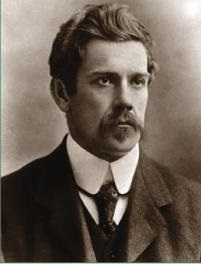
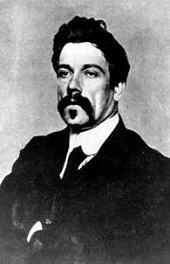
1871-1909 [Edmund John Millington Synge; JMS]; b. 16 April, Newtown Little [i.e., No. 2, Newtown Villas - one of two houses], Rathfarnham, Co. Dublin; pat. grandfather was John Hatch Synge, called Pestalozzi John on account of his admiration for the Italian educationalist, and founder of an educational experiment at his estate in Glanmore, Co. Wicklow; maternal gf. was Rev. Robert Traill of Schull Relief Committee (d.1847); his father, 3rd son of John Hatch Synge, became a lawyer and died of smallpox in 1872; his mother then moved from Hatch St. to 4 Orwell Park, Rathgar, next door to his grandmother, a house afterwards occupied by his sister Annie; one br., Robert, settled in Argentina as engineer; another, Samuel, settled in China as missionary, while Edward became land agent to the Synge estates and later to Lord Gormanstown, and was involved in evictions in Galway and Wicklow, causing JMS to reproach his mother (to which she replied, What would become of us if our tenants in Galway stopped paying their rents?); |
|
JMS ed. privately, at Mr Haricks Classical and English School, Upr. Leeson St., and later briefly at Aravon School, Bray; visits Isle of Man with his mother at eleven; shares childhood interest in ornithology with his cousin Florence Ross; reads and annotates Charles Watersons Wanderings in South America; reads Darwin and espouses atheism (By the time I was sixteen or seventeen I had renounced Christianity after a good deal of wobbling); studies the violin with Patrick Griffin for two years; becomes an RIAM student, playing piano, flute, violin and winning awards for counterpoint and harmony; enters TCD, 1889 and studies Irish with Rev. James Goodman (1828-96; an amiable old clergyman who made him read a crabbed version of the New Testament …), also studies Hebrew in his final year; reads George Petrie on Irish antiquities and the Aran Islands; joins Academy orchestra, 1891; grad. TCD BA (Pass), 1892; |
| |
publishes a Wordsworthian poem in Kottabos, 1893; decides to become a professional musician; travels to Germany with a cousin of his mother, Mary Synge, to study music, staying at Coblenz with the van Eicken sisters (among whom Valeska), 1893; moves to Wurzburg, Jan. 1894, and studies piano and violin there, composing privately; returns to Ireland, June 1894; moves to Paris, 1 Jan. 1895; joins debating society; studies literature and languages at Sorbonne, reading widely; visits Italy, 1896; visits Dublin in summers, meeting Cherrie Matheson, dg. of a leading a Plymouth Brethren; proposes to her in 1895 and 1896; forms friendship with Stephen MacKenna; meets W. B. Yeats in Paris, Dec. 1896, and is encouraged by him to go to the Aran Islands [Yeats, Pref., Well of the Saints]; |
| |
reads Pierre Loti (e.g., Pêcheur dIslande/Iceland Fisherman, 1886, set among Breton fishermen); attends lecture by Anatole le Braz on Brittany, April 1897 and read his La Légend de la Morte en Basse Bretagne (1893) and Au Pays des Pardons (1894); attends lectures by Henri dArbois de Jubainville at the Sorbonne and writes criticism for various journals; finds Maud Gonnes Paris group (Irlande Libre with a paper of the same name) mendacious and gives up attending; suffers his first attack of Hodgkins disease, 1897; writes Vita Vecchia (1897-99), fourteen poems connected by prose narrative, after Petrarch, and Étude Morbide (1899), an imaginary portrait, later rejected as unduly influences by literary decadence; undergoes removal of enlarged gland in neck, 1897, resulting in Under Ether (essay); When the Moon has Set, 1900 [var. 1901], all unpublished prior to [production]; travelled to Inismore, May 1898; |
|
first invited to visit Coole, meeting Lady Gregory, Yeats, and Edward Martyn, summer 1898; spends late summers of 1899-1902 on Aran Islands (where an uncle, Alexander Synge, had prev. visited as a proselytiser - unfortunately banning Sunday games; stops first at Aranmore but soon decides to move move on to Inishmaan, where Gaelic is more generally used and the life is perhaps the most primitive that is left in Europe (CW, Prose II, p.53); continues living chiefly in Paris, visiting Brittany and Ireland annually in other seasons; his earliest account of Aran appears in New Ireland Review (A Story from Inishmaan, Nov. 1898); prob. first encounters Lady Gregory at Lit. Theatre productions, May 1899 and briefly afterwards in Paris, May 1900; publishes The Aran Islands (completed 1901; publ. Maunsel 1907), [my] first serious piece of work, ill. Jack B. Yeats, arising out of collaboration on articles on Congested Districts for Manchester Guardian, placed by its editor John Masefield, 1905; |
|
JMS makes a week-long visit [the second] to Coole Park, Sept. 1901 and presents Yeats and Lady Gregory with a draft of The Aran Islands, shortly receiving enthusiastic response from the latter; writes two-act plays Riders to the Sea and In the Shadow of the Glen [earliest title; later The Shadow of the Glen ; first drafted as In the Glen ], Summer 1902; set in Glenmalure, Co. Wicklow, nr. Synge family summer residence at Tomriland, Co. Wicklow, and based on a story narrated to Synge by Pat Dirane; rough-drafts The Tinkers Wedding, 1902; not played till 1909 (in London) and 1971 (in Dublin) due to risk of offence to Catholic audiences; JMSs third sojourn at Coole Park, Oct. 1902; quits Paris flat, March 1903, moving to London; |
| |
his one-act play In the Shadow of the Glen is performed (under that title) by Irish National Theatre at Molesworth Hall, 10 October 1903, with W. G. Fay in the lead; based on a story of an unfaithful wife told him by Pat Dirane and narrated in The Aran Islands, it was attacked by Arthur Griffith and others in nationalist press as a slur on Irish womanhood and a vile and inhuman story told in the foulest language we have ever listened to ... (Griffith, United Irishman); play Riders to the Sea was performed in Feb. 1904, likewise attacked by Patrick Pearse (a sinister and unholy gospel …) and others; JMS produced fragment of play on Rebellion of 1798 at behest of Frank Fay, March 1904; living at family home, 31, Crostwaithe Tce., Glasthule [Kingstown/Dunleary] but moved to 15 Maxwell Rd., Rathmines, some time before Oct. 1904; appt. literary adviser to Abbey Theatre at its foundation, Dec. 1904; later appt. director with Yeats and Lady Gregory in the limited liability company, Sept. 1905; his play The Well of the Saints (Abbey 1905), also attacked by nationalists, but produced by Max Meyerfeld at Berlin Deutsches Theater, Jan. 1906;
|
|
JMS spends summer of 1905 in Ballyferriter perfecting his Irish (resulting in In West Kerry, 1907); The Playboy of the Western World (Abbey, 26 Jan. 1907), based on the story of a man who killed his father with a loy [turf-cutting implement] which Synge purported to have heard from Pat Dirane on Aran, first produced amid riots triggered by the phrase chosen females in their shifts alone - which Fay aggravated by misquoting as Mayo girls - counted the chief outrage by the Freemans Journal (i.e., the word shift) and thus conveyed in telegram from Lady Gregory to Yeats, then in Aberdeen; riots exacerbated by Robert Gregorys band of Trinity students who sing God Save the King; theatre seats torn up; Yeats returns from Aberdeen to address the audience as The author of Cathleen Ni Houlihan and calls the DMP [police] into the theatre to keep the peace; Synge harried into an interview with Evening Mail, which he afterwards regrets; The Playboy published with preface acknowledging debt to the folk imagination (1907); |
|
JMS enters Elpis Nursing Home, Dublin; becomes engaged during his last illness to Molly Allgood [aka Máire ONeill, q.v.], to whom he wrote letters signed your old tramp; read the Bible in a brown-paper wrapping during his last days (acc. Edward Stephens); d. at Elpis of Hodgkins disease, 24 March; bur. Mount Jerome, Rathfarnham, Co. Dublin, in a family grave with Jane Synge (d.1899), 2nd dg. of John Synge of Glanmore, Co. Wicklow, and Mary Synge with her husband Samuel Synge (resp. 1864-1939 and 1867-1951); the Synge family refused to permit Molly to attend his funeral; his last play Deirdre of the Sorrows, begun in 1907 but left uncompleted, was performed at the Abbey in a version prepared by Yeats and Molly Allgood, for whom it was written, Jan. 1910 (being Synges reverie over death, his own death, acc. Yeats in in Autobiographies); the Collected Works were edited by Alan Price, Ann Saddlemyer, et al. (OUP 1962-68); Vaughan Williams wrote an operatic version of Riders to the Sea in 1927 (premiered in Dec. 1937 at the Royal College of Music, London); JMSs letters to Molly published in the centenary year when the catalogue of the Synge MSS in the Library of Trinity College, Dublin was also issued by Dolmen Press (1971);
|
|
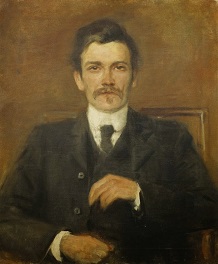
| for W. B. Yeats, in his Nobel acceptance speech, Synge was incapable of a political thought or of a humanitarian purpose. - meaning that he was pure imagination (Autobiographies; p.567); there is a portrait of Synge by J. B. Yeats in the Municipal Gallery, Dublin, and a plaque to him at Croswaithe Tce., Dun Laoghaire; his papers are held in the National Library of Ireland; in 1979, the Abbey Theatre presented Pope John-Paul II with a rare edition of The Playboy during his visit to Ireland; an annual Synge Summer School was opened by Cyril Cusack at Rathdrum, Co. Wicklow in 1991 and directed for many years thereafter by Nicholas Grene (TCD) at Avondale, the home of Charles Stewart Parnell; the session in 2000 was opened by Seamus Heaney; Druid Th. Company produced the six major plays as DruidSygne, premiered at Galway Theatre Festival (July 2005). PI NCBE DIB DIW DIH DIL OCEL KUN FDA G20 OCIL
|
|
Works
| Poetry |
- Poems and Translations (Dublin: Cuala Press 1909) [ltd. edn. 250 copies], prefs. by W. B. Yeats (April 4 1909) & J. M. Synge (Glenageary, Dec. 1908); another edn. published privately by John Quinn (1909) [75 copies];
- Robin Skelton, ed., Some Sonnets from Laura in Death, after the Italian of Petrarch (Dublin: Dolmen 1971) [ltd. edn. 775];
- Robin Skelton, ed., Poems, [in] Collected Works, Vol. I (Dolmen Press/OUP 1962), 128pp. [with introduction and apparatus].
|
| |
| Plays |
- The Shadow of the Glen, Riders to the Sea (London: Elkin Mathews 1905) [4,000 iss. in 1910 rep.];
- The Well of the Saints by J. M. Synge: Being Volume Four of Plays for an Irish Theatre (London: A. H. Bullen 1905), with an Introduction: Mr. Synge and His Plays by W. B. Yeats; and Do ., [Maunsel Pocket Edn.] (Dublin: Maunsel 1911);
- The Playboy of the Western World (Dublin: Maunsel 1907), J. B. Yeats port.;
- Deirdre of the Sorrows (Dublin: Cuala 1910), and Do. [Maunsel Pocket Edn.] (Dublin: Maunsel 1911);
|
Note: The Tinkers Wedding, Riders to the Sea, and The Shadow of the Glen were all published in Maunsel Pocket Edns. (Dublin: Maunsel 1912) as part of a Collected Works edn. Likewise [in assoc.] Allen & Unwin published a Collected Works edition in 1910 incl. The Aran Islands. |
| Prose |
- The Aran Islands (Dublin: Maunsel 1907) [see extracts];
|
| Correspondence |
- Letters of John Millington Synge and Material Supplied by Max Meyerfeld, in Yale Review (July 1924), pp.690-709;
- Ann Saddlemyer, ed., John Millington Synge, Some Unpublished Letters (Montreal: Redpath Press 1959), 33pp.;
- Ann Saddlemyer, ed., Some Letters of John M Synge to Lady Gregory and W. B. Yeats (Dublin: Cuala Press 1971), 85pp. [ltd. edn., 500 copies];
- Ann Saddlemyer, ed., Letters to Molly, John Millington Synge to Maire ONeill (Cambridge, Mass.: Belknap Press of Harvard UP 1971), xxxiv+330pp.;
- L[ilo] M. Stephens, sel., My Wallet of Photographs (Dublin: Dolmen 1971);
- Ann Saddlemyer, ed., Some Letters of John M. Synge to Lady Gregory and W. B. Yeats (Dublin: Cuala 1971);
- Ann Saddlemyer, ed., Synge to MacKenna: The Mature Yeats, in Massachusetts Review, 5, 2 (Winter 1964), pp.279-295 [rep. in Robin Skelton & David R. Clark, eds., Irish Renaissance: A Gathering of Essays, Memoirs, and Letters from the Massachusetts Review, Dublin: Dolmen 1965, pp.65-79];
|
|
Synge Manuscripts in the Library of TCD, A Catalogue Prepared for [ … ] the Synge Centenary Exhibition, 1971 (Dublin: Dolmen 1971), 55pp.; incls. drafts of Playboy, &c.; reading and lecture notes on Locke, Stokes, Petrie and Trench (1889); language notebooks on Italian & Irish, with reading notes on folklore, mythology, contemp. writers and lit. exercises (1895-96;1898-99); notebook on var. subject - lit., artistic, scientific, political, and philosophical, inc. Marx and Hegel in German (1894-95); notes on Irish tramp, dialogue between Rabelais and Thomas à Kempis and other French material (1897-98). Notebook drafts of plays on old Irish themes, with notes on Villon, Ronsard and Greene (12904-08); Notebook dated Aranmore /Inismaan, May 1898; Notebook with drafts and poems for Vita Vecchia (1898); notebook with Wicklow material, related poems, Playboy material and notes for essay on Historical and Peasant Drama (Spring/Summer 1907); Notebook on Congested Districts; notes for Playboy (1905) [all the foregoing listed in Maria Filomena Pereira Rodriguez Louro, The Drama of J. M. Synge: A Challenge to the Ideology of Myths of Irishness (PhD Diss., Univ. of Warwick 1991 [.pdf online; accessed 02.11.2009].
|
| |
See also [q.a.,] Infinite Riches in a Little Room: The Manuscripts of J. M. Synge, in Long Room, 1, 3 (TCD Library [q.d.]) |
|
| Collected Editions |
- W. R. Rodgers, intro., Collected Plays [Penguin Books, 845] (Harmondsworth: Penguin 1952);
- Robin Skelton, Alan Price & Ann Saddlemyer, eds., Collected Works of John Millington Synge, 4 vols. (OUP 1962-68) - Vol. 1: Poems, ed. Skelton (1962), Vol. 2: Prose, ed. Price (1966), Vols. 3 & 4: Plays, ed. Saddlemyer (1968) [see details];
- Alison Smith, ed., Plays, Poems and Prose [Everyman] (London: J. M. Dent 1975), and Do
- [rev. edn. as] Collected Plays, Poems and The Aran Islands [Everyman Library; rev. edn.] (London: J. M. Dent 1992, 1996), xxxiv, 382pp. [see contents];
- T[om] R Henn, ed., The Plays and Poems of J. M. Synge [Univ. Paperback Drama Book] (London: Methuen 1963; rep. 1968)
|
| Reprint Editions |
- David R. Clark, ed., John Millington Synge, Riders to the Sea (Columbus Ohio: Merrill 1970), vi+137pp.;
- Anne Saddlemyer, ed., The Playboy of the Western World and Other Plays [World Classics Series] (OUP 1995) [see contents];
- The Playboy of the Western World and Two Other Irish Plays (Harmondsworth: Penguin 1996), 224pp. [Synge, Yeats, and OCasey];
- Tim Robinson, ed. & intro., The Aran Islands [1907] (Penguin 1997), 150pp.;
- J. M. Synges Aran Islands and Connemara (Cork: Mercier Press 2008), 224pp.;
- The Aran Islands (London: Serif 2008), 226pp.
- Travels in Wicklow, West Kerry and Connemara, introduced by Paddy Woodworth (London: Serif 2008), 223pp., ill. [Jack Yeats].
|
|
Works of J. M. Synge available at Gutenberg Project (June 2007) |
| Drama |
|
- Deirdre of the Sorrows
- In Shadow of the Glen
- The Playboy of the Western World
- Riders to the Sea
- The Tinkers Wedding
- The Well of the Saints
|
|
| Prose |
|
- The Aran Islands
- In Wicklow and West Kerry
|
|
|
…. Go to Gutenbergy Project [ online ] |
Bibliographical Details
Robin Skelton, Alan Price & Ann Saddlemyer, ed., Collected Works of John Millington Synge (London: Oxford University Press 1962-68), as follows: Robin Skelton [General Editor], Vol. I, containing Poems, Translations, and some Poetic Drama; Alan Price, ed., Vol. II (1966), containing Prose: Autobiographical Sketches The Aran Islands; In Wicklow, West Kerry and Connemara, and various Reviews and Essays or Notes about Literature; Ann Saddlemyer, ed., Vol. III (1968), containing Riders to the Sea; The Shadow of the Glen; The Well of the Saints; When the Moon Has Set; Fifteen Scenarios, Dialogues, and Fragments from Unpublished Material; Draft Material; editorial apparatus. Ann Saddlemyer, ed., Vol. IV (1968), containing The Tinkers Wedding; The Playboy of the Western World; Deirdre of the Sorrows; Draft Material; editorial apparatus. [See Weldon Thornton, Synge and the Western Mind, Gerrards Cross: Colin Smythe 1979.]
[ top ]
Anne Saddlemyer, ed., The Playboy of the Western World and Other Plays [World Classics Series] (OUP 1995), 213pp., in which the texts stand as in 1968 edn., with refs. to variants for The Well of the Saints more recently discovered; also select bibliography and bio-chronology; titles include Riders to the Sea [first publ. 1903]; The Shadow of the Glen ([1904]; The Tinkers Wedding [1907]; The Well of the Saints [1905]; The Playboy of the Western World [1907]; Deirdre of the Sorrows [orig. 1910].
Alison Smith, ed., Plays, Poems and Prose [Everyman] (London: J. M. Dent 1975), and Do [rev. edn. as] Collected Plays, Poems and The Aran Islands [Everyman Library; rev. edn.] (London: J. M. Dent 1992, 1996), xxxiv, 382pp. CONTENTS: Plays in one act: Shadow of the glen; Riders to the sea. Plays in two acts: Tinkers wedding. Plays in three acts: Well of the saints; Playboy of the western world; Deirdre of the sorrows. Poems and translations: Aran Islands. Bibl., pp.[xxxiii]-xxxiv.]
[ top ]
In Wicklow and West Kerry (1910), contains In Wicklow, In West Kerry (1907), In the Congested Districts, and Under Ether. The 1911 edn. omits the last-named and retitles the third In Connemara. The Kerry pieces first appeared in successive numbers of The Shanachie for 1907; the Connemara sections originally appeared as a series of twelve articles in Manchester Guardian (10 June-26 July 1905); ill. Jack B Yeats.
[ top ]
The Works of John M. Synge, Library Edition, Large Crown 8vo., 5 vols. (25/6 net); Pocket edn., foolscap 8vo., quarter parchment, gilt top. Complete set of 8 vols. in box (20/- net), also separately (2/6 net). Vol. 1, The Playboy of the Western World; Vol. II, Deirdre of the Sorrows; Vol. III, The Well of the Saints; Vol. IV, The Tinkers Wedding, Riders to the Sea, and In the Shadow of the Glen; Vol. V, Poems and Translations; Vol. VI & VII, The Aran Islands; Vol. VIII, In Wicklow and West Kerry. Also, The Aran Islands, with drawings by Jack B. Yeats, large Crown 8vo., cloth, gilt, 6/-.
[ top ]
DruidSynge: The Plays of John Millington Synge [Catalogue of Druid Th. Co. presentation of the Synge stage canon] (Galway: Druid Performing Arts 2005), 121pp., ill., ports. [incl. John Millington Synge by Tim Robinson, p.27; biographies of cast and crew.
Query , An Old Womans Lamentations (Dublin: Cuala Press 1907) [presum. Riders to the Sea].
|
[ top ]
| Criticism |
| Early notices |
- W. B. Yeats, Synge and the Ireland of His Time, in The Forum [NY] (Aug. 1911);
- J[ack]. B. Yeats, A Note Concerning a Walk through Connemara with Him [q. source];
- John Masefield, John M. Synge,, in Contemporary Review (April 1911);
|
See also Frank Hugh ODonnell, The Stage Irishman and the Pseudo-Celtic Drama (1904), attack on the Abbey rep. in Stephen Brown, S.J., Guide to Books on Ireland (Dublin: Talbot 1912) [q.pp.]. For contemporary Irish views of Synge, see Irish Book Lover, Vols. 1-6;
|
|
| Standard Biographies & Major studies |
- Daniel Corkery, Synge and the Anglo-Irish Literature: A Study (Cork UP; London: Longmans, Green 1931; Cork UP 1966);
- David H. Greene & Edward M. Stephens, J. M. Synge 1871-1909 (NY: Macmillan 1959; 1961);
- D. Gerstenberger, John Millington Synge (NY: Twayne UP 1964);
- Ann Saddlemyer, J. M. Synge and Modern Comedy (Dublin: Dolmen 1968);
- Robin Skelton, J. M. Synge and His World (London: Thames & Hudson; NY: Viking 1971), 144pp., ills.;
- Andrew Carpenter, ed., My Uncle John: Edward Stephenss Life of J. M. Synge (OUP 1974), 222pp., index [see contents];
- Nicholas Grene, Synge: A Critical Study Interpretation of the Plays (NJ: Rowman & Littlefield; London: Macmillan 1975);
- Weldon Thornton, Synge and the Western Mind (Gerrards Cross: Colin Smythe 1979), 169pp. [see contents];
- Declan Kiberd, Synge and the Irish Language (London: Macmillan 1979), and Do ., [2nd edn.] (Dublin: Gill & Macmillan 1993), 294pp.
- Mary C. King, The Drama of J. M. Synge (London: Fourth Estate 1985);
- David M. Kiely, J. M Synge: A Biography (Dublin: Gill & Macmillan 1994).
- W. J. McCormack, The Fool of the Family: The Life and Death of J. M. Synge (London: Weidenfeld & Nicolson 2000), 499pp.
|
|
| Paper collections |
- Thomas R. Whitaker, ed., Twentieth-Century Interpretations of Playboy of the Western World (NJ: Prentice Hall 1969);
- Maurice Harmon, ed., J. M. Synge Centenary Papers, 1971 (Dublin: Dolmen 1972), xvi+202pp [incl. Seán Ó Tuama, Synge and the Idea of a National Literature, pp.1-17; Alan J. Bliss, The Language of Synge, cp.35; Thomas Kilroy, Synge and Modernism, pp.167-79, &c.];
- Suheil B Bushrui, ed., Sunshine and the Moons Delight, A Centenary Tribute to John Millington Synge (Gerrards Cross: Colin Smythe 1972) [incl. Ann Saddlemyer, Art, Nature and The Prepared Personality, A Reading of The Aran Islands and Related Writings, pp.107-20; Robert ODriscoll, Yeatss Conception of Synge, pp.159-71];
- Ronald Ayling, ed., J. M. Synge: [Collection of Critical Essays on ] Four Plays (London: Macmillan 1992);
- Nicholas Grene, ed., Interpreting Synge: Essays from the Synge Summer School 1991-2000 (Dublin: Lilliput 2000), 220pp. [see contents].
- Claire Culleton, ed., Irish Modernism and the Global Primitive (London: Palgrave 2009) [incls. Justin Carville, Visible Others: Photography and Romantic Ethnograhy in Ireland].
|
|
| Bibliographies & reference |
- [Q. auth.,] A Check List of First Editions of Works by John Millington Synge and George William Russell, TCD Annual Bulletin (1956), pp.4-9;
- M. J. MacManus, A Bibliography of Books Written by John Millington Synge [Bibliograpies of Irish Authors, 4] (Dublin: Talbot Press 1930) [prev. in Dublin Magazine, n.s., V (Oct.-Dec. 1930), pp.47-51];
- Sean OFaolain, John Millington Synge (1871-1909), in F. W. Bateson, ed., The Cambridge Bibliography of English Literature, III (Cambridge UP [1967]), pp.1062-63;
- E. A. Kopper, Jnr., ed., John Millington Synge, A Reference Guide (Boston: G. K. Hall; London: George Prior 1970);
- Paul M. Levitt, J. M. Synge: Bibliography of Published Criticism (Dublin: IUP 1974), 224pp.;
- E. H. Mikhail, J. M. Synge: A Bibliography of Criticism (London: Macmillan; Totowa, NJ: Rowman &c. 1975), 214pp.;
- E. A. Kopper, A J. M. Synge Literary Companion (NY: Greenwood Press 1988).
|
|
[ top ]
Critical studies: annual listing
- Obituary, in The Irish Times (25 March 1909), accompanied by a leader on the subject and a report on the Funeral of Mr J. M. Synge (pp.6 & 8).
- George A. Birmingham, The Literary Movement in Ireland, in Fortnight Review, LXXXII (Dec. 2 1907), pp.947-57.
- Mary Colum, John Synge, in Irish Review, Vol. 1, No. 1 (March 1911), pp.39-42.
- W. B. Yeats, J. M. Synge and the Ireland of His Time, in The Forum, XLVI [New York] (August 1911), pp.179-200; rep. in Essays (London: Macmillan 1924) [therein dated 14 Sept. 1910].
- Jack B. Yeats, With Synge in Connemara, in W. B. Yeats, [ed.,] Synge and the Ireland of His Time … &c.] (Dublin: Cuala Press 1911) [var. A Walk with Synge Through Connemara].
- John Masefield, John M. Synge, in Contemporary Review (April 1911), pp.470-78.
- Francis Bickley, J. M. Synge and the Irish Dramatic Movement (London: Constable; NY: Houghton Mifflin 1912), 96pp. [see extract].
- Percival Presland Howe, J. M. Synge: A Critical Study (London: Martin Secker 1912), 216pp., Do ., rep. edn. (Conn: Greenwood Publ. [1995]).
- Maurice Bourgeois, John Millington Synge and the Irish Theatre (London: Constable 1913), xiv, 338pp., [17pp., ills., ports.]; Do. [rep. edn.] (NY: Haskell House, 1966), xiv, 337pp., and Do. (NY; Benjamin Blom 1968), xvi + 334pp. [Bibl., pp.251-314].
- Lady Gregory, Our Irish Theatre (NY: Putnam 1913), esp. pp.119-39 [rep. from The English Review (March 1913), pp.556-66].
- Robert de Flers, Figaro (14 Dec. 1913), p.4 [review of performance of French translation of Playboy ].
- John Masefield, John M. Synge: A Few Personal Recollections with Biographical Notes by John Masefield (NY: Macmillan 1915), 35pp. [rep. in Masefield, Recent Prose, 1924, pp.163-87].
- Barrett H. Clarke, The Playboy in Paris, Colonnade 11 (Jan. 1916), cp.23.
- Padraic Colum, Memories of Synge, in The Literary Review [of New York Evening Post ] II (4 June 1921), pp.1-2.
- Yeats, More Memories, in The Dial, LXXIII [Chicago] (Sept. 1922), pp.283-302 [incl. his description of the meeting with Synge in Paris, pp.298-301], Do ., rep. in The Trembling of the Veil 1922), and in Autobiographies (1926), &c..
- Hugh lA Fausset, Synge and Tragedy, in Fortnight Review, CXV (Feb. 1 1924), pp.258-73.
- CHH [Cherrie Matheson], John Synge as I Knew Him, in The Irish Statesman, 5 July 1924, pp.532, 534 [prefaced [by] Yeatss A Memory of Synge].
- Arthur Lynch, Synge, a Letter to the Editor in The Irish Statesman (20 Oct. 1928), p.131.
- W. B. Yeats, The Death of Synge and Other Pages from an Old Diary, in The Dial [Chicago], April 1928, pp.271-88; Do ., rep. as … and Other Passages… (&c.), in The London Mercury, XVII, April 1928, pp.637-52, and Do., rep. as The Death of Synge, and Other Passages from an Old Diary (Churchtown, Dundrum [Dublin]: Cuala Press 1928) [later The Death of Synge: Extracts from a Diary Kept in 1909, in Autobiographies, Macmillan 1955, pp.499-527].
- S[amuel] Synge, Letters to my Daughter: Memories of John Millington Synge (Talbot 1932) [var. 1st edn. 1931].
- Frank OConnor, Synge, in The Irish Theatre, ed. Lennox Robinson (London: Macmillan 1939), xiv, 220pp..
- David H. Greene, An Adequate Text of J. M. Synge, in Modern Language Notes, LXI [Baltimore] (Nov. 1946), pp.466-67.
-
Benedict Kiely, Liam OFlaherty: A Story of Discontent, in The Month, [n.s.] II (Sept. 1949), c.p.185.[remarks the OFlaherty was essentially a stranger in mainland Ireland].
- Synge Special Number, The Envoy, No. 16 (March 1951)), [includes contribs. by Patrick Kavanagh, Owen Quinn, et al.].
- Irving D. Suss, The Playboy Riots, in Irish Writing, 18 (March 1952), pp.39-42.
- Donald Davie, On the Poetic Diction of J. M. Synge, Dublin Magazine, Vol. 27 [new series] (1952), pp.32-8.
- Raymond Williams, J. M. Synge, in Drama: From Ibsen to Eliot (London: Chatto and Windus 1952), pp.154-74.
- Denis Donoghue, Synge, Riders to the Sea, A Study in Irish University Review, 1 (Summer 1955), pp.52-58 [rep. in Clark, op. cit. infra 1970].
- Herbert Howarth, The Irish Writers 1880-1940 (London: Rockliff 1958) [q.pp.]
- Alan Price, Synge and Anglo-Irish Drama (London: Methuen 1961), xii, 236pp.
- Patricia Meyer Spacks, The Making of the Playboy, in Modern Drama IV (Dec. 1961), pp.314-23.
- T. R. Henn, intro. to. "The Playboy of the Western World", in From the Plays and Poems of J. M. Synge, ed. Henn (London: Methuen & Co. 1963), pp.56-67.
- Michael J. Sidnell, Synges Playboy and the Champion of Ulster, Dalhousie Review, XLV (Spring 1965), pp.51-59.
- Donna Gerstenberger, John Millington Synge (Boston: Twayne Publ. 1964), and Do. [rev. edn. 1990],
xii, 144pp.
- Denis Johnston, John Millington Synge (NY & London: Columbia UP 1965), 48pp.
- Howard D. Pearce, Synges Playboy as Mock-Christ, in Modern Drama, 8, 3 (Dec. 1965), pp.303-10.
Robin Skelton and Ann Saddlemyer, eds., The World of W. B. Yeats (Seattle: Washington UP 1965).
- Ann Saddlemyer, Rabelais Versus à Kempis: The Art of J. M. Synge, in Komos, 1 (1967), pp.85-96.
- Diane E. Bessie, Little Hound in Mayo, Dalhousie Review, XLVIII (Autumn 1968), pp.372-83.
- James F. Kilroy, The Playboy as Poet, in PMLA, LXXXIII (May 1968), pp.439-42.
- Malcolm Pittock, Riders to the Sea ; in English Studies, XLIX (Oct. 1968), pp.445-49.
- Stanley Sultan, A Joycean Look at The Playboy of the Western World , in Maurice Harmon, ed., The Celtic Master [1st Joyce Symposium in Dublin 1967] (Dolmen Press 1969), pp.45-55.
- Paul M. Levitt, The Structural Craftsmanship of J. M. Synges Riders to the Sea, in Éire-Ireland, 4, 1 (Spring 1969), pp. 53-61.
- Jeanne Flood, The Pre-Aran Writings of J. M. Synge, Éire-Ireland, 5, 3 (Autumn 1970), pp.63-80.
- Seán McMahon, Clay and Worms, Éire-Ireland, 5, 4 (Winter 1970), pp.116-43.
- James F. Kilroy, The Playboy Riots [Irish Theatre Series, No. 4] (Dublin: Dolmen 1971), 101pp.
- Robin Skelton, The Writings of J. M. Synge (NY: Bobbs-Merrill; London: Thames & Hudson 1971), 190pp.
- Robin Skelton, Remembering Synge [Poetry Ireland Edns.] (Poetry Ireland 1971).
- W. R. Rodgers, Irish Literary Portraits (London: BBC 1972), J. M. Synge, pp.94-115.
- S. B. Bushrui, Synge and some Companions with a Note Concerning a Walk through Connemara with Jack Yeats, Yeats Studies No. 2 (1972), pp.18-34.
- Balahantra Rajan, Yeats, Synge and the Tragic Understanding, in Yeats Studies No. 2 (1972), pp.66-79.
- Malcolm Kelsall, Synge in Aran, in Irish University Review, V, 2 (Autumn 1975), pp.254-70.
- Suheil Bushrui, Synge and the Doors of Perception, in Andrew Carpenter, eds., Place, Personality, and the Irish Writer (Gerrards Cross: Colin Smythe 1977), pp.97-120 [var. Ann Saddlemyer].
- K[atherine] Worth, The Irish Drama of Europe, From Yeats to Beckett (London: Athlone Press 1978);
- Paul F. Botheroyd, Tinkers, Tramps and Travellers in Early Twentieth-century Irish Drama and Society, in Studies in Anglo-Irish Literature, ed. Heinz Kosok (Bonn: Bouvier Verlag Herbert Grundmann 1982), [espec. p.162].
- Robert Welch, J. M. Synge: Transfigured Realism, Changing States: Transformations in Modern Irish Writing (London: Routledge 1993), pp.80-118.
- Kiberd, John Millington Synge agus athbheocan na Gaeilge, in Scríobh 4 (1979) pp.221-23.
- George Watson, J. M. Synge, The Watcher and the Shadows, in Irish Identity and the Literary Revival (London: Croom Helm 1979), pp.35-86.
- Anthony Roche, The Two Worlds of Synges The Well of Saints, in The Genres of Irish Literary Revival , ed. Ronald Schleifer (Oklahoma: Pilgrim; Dublin: Wolfhound 1980), pp.27-38.
- Alan Warner, John Millington Synge [chap.], in A Guide to Anglo-Irish Literature (Dublin: Gill & Macmillan 1981), pp.182-208.
- T. OBrien Johnson, Synge: The Medieval and the Grotesque (Gerrards Cross: Colin Smythe 1982).
- Nicholas Grene & Ann Saddlemyer, Stephen MacKenna on Synge: A Lost Memoir, in Irish University Review (Autumn 1982) [q.p.].
- Eugene Benson J. M. Synge (Dublin: Macmillan 1982),
xii, 167pp., ill. [8pp. pls.].
- Mark Patrick Hederman, The Playboy versus the Western World, Synges political role as artist , in Crane Bag Book of Irish Studies (1982), pp.59-65.
- D. E. S. Maxwell W. B. Yeats and J. M. Synge, Modern Irish Drama [Chap. 3] (OUP 1984), pp.33-59.
- Seamus Deane, Synge and Heroism, in Celtic Revivals: Essays in Modern Irish Literature, 1880-1980 (London: Faber & Faber 1985), pp.51-62.
- Nicholas Grene, Synge: A Critical Study (Basinstoke: Macmillan 1975), and Do. [rep. with alterations] (Basingstoke: Macmillan 1985), 202pp.
- Anthony Cronin, John Millington Synge: Apart from Anthropology, Heritage Now: Irish Literature in the English Language (Dingle: Brandon 1982), pp.95-104.
- Maxwell, J. M. Synge and Samuel Beckett, in Gerald Dawe and Edna Longley, eds., Across the Roaring Hill, The Protestant Imagination in Modern Ireland (Belfast: Blackstaff 1985), pp.25-38.
- James Carney, The Playboy and the Yellow Lady (Dublin: Poolbeg Press 1986).
- [...]
- Robin Skelton, Celtic Contraries (Syracuse UP 1990), espec. Chaps 1, 2 & 3.
- Maria Filomena Pereira Rodriguez Louro, The Drama of J. M. Synge: A Challenge to the Ideology of Myths of Irishness (PhD Diss., Univ. of Warwick 1991) [Synge as coloniser who refuses [after Fanon].
- Daniel J. Casey, ed., Critical Essays on John Millington Synge (NY: G.K. Hall [1994]), ix, 188pp. [infra].
- Declan Kiberd, J. M. Synge - Remembering the Future, in Inventing Ireland: the Literature of the Modern Nation (London: Jonathan Cape 1995), pp.167-88.
- Deborah Fleming, The Man Who does not Exist: The Peasant in the Work of W. B. Yeats and J. M. Synge (Michigan UP 1995).
- Joseph Devlin The Source of Synges Playboy of the Western World,, in Notes on Modern Irish Literature, 7, 2 (Fall 1995), pp.5-9.
- Alexander G. Gonzalez, Assessment of the Achievement of J. M. Synge (Conn: Greenwood Press 1996), 250pp.
- René Agostini, J. M. Synges Celestial Peasants, in Rural Ireland, Real Ireland, ed. Jacqueline Genet (Gerrards Cross: Colin Smythe 1996) [c.p.163.]
- Anthony R. Hale, Framing the Folk: Zora Neale Hurston, John Millington Synge, and the Politics of Aesthetic Ethnography, in The Comparatist, Postcolonial Theory and Irish Literature [Special Issue, guest ed., Michael R. Molino], Vol. XX [Virginia Commonwealth Univ.] (May 1996), pp.50-61.
- Luke Gibbons, Synge, Country and Western: The Myth of the West in Irish and American Culture in Transformations in Irish Culture (Field Day/Cork UP 1996), pp.23-35.
- Ronán MacDonald, A Gallous Story or a Dirty Deed?: J. M. Synge and the Art of Guit, in Irish Studies Review, No. 17 (Winter 1996/7), pp.25-30.
- Joseph Devlin, J.M. Synges The Playboy of the Western World and the Culture of Western Ireland under Late Colonial Rule, in Modern Drama, 41 (1998), pp.371-84.
- Chiaki Kojima, J. M. Synge and Nationalism: Concerning The Playboy of the Western World, in The Harp, 13, (1998), pp.50-60
[available at JSTOR online].
- Declan Kiberd, Synges Tristes Tropiques: The Aran Islands, in Irish Classics (London: Granta 2000), pp.420-39.
-
Mary C. King, Conjuring Past or Future? Versions of Synges Play of 98, in The Irish Review, 26, 1 (Autumn 2000), pp.71-79;
- David Edgar, Whats Coming, review of W. J. McCormack, Fool of the Family: A Life of J. M. Synge, in London Review of Books (22 March 2001, pp.34-35) [see extract]
- Gregory Castle, Modernism and the Celtic Revival (Cambridge UP 2001) [Chap. 3, Synge-on-Aran: The Aran Islands and the Subject of Revivalist Ethnography, & Chap. 4, Staging Ethnography].
- Christopher Morash, A Night at the Theatre 4: The Playboy of the Western World and Riders to the Sea […] Abbey Theatre, Tuesday 29 January 1907 [chap. in], A History of Irish Theatre 1601-2000 (Cambridge UP 2002), pp.130-38.
- Ronan McDonald, Tragedy and Irish Literature: Synge, OCasey, Beckett (London: Palgrave 2002), 214pp.
- Nelson OCeallaigh Ritschel, Synge and Irish Nationalism: The Precursor to Revolution (Westport, NJ: Greenwood Press 2002), xvi, 113pp.
- Paul Murphy, J. M. Synge and the Pitfalls of National Consciousness, in Theatre Research International, 28 [Cambridge Online Journals] (28 July 2003) [available at TRI - online].
- P. J. Matthews, Revival: The Abbey Theatre, Sinn Féin, the Gaelic League and the Co-operative Movement (Cork UP 2003), 280pp. [whole chap. on Shadw of the Glen.].
- Mary C. King, J. M. Synge, National Drama and the post-Protestant Imagination, in The Cambridge Companion to Twentieth-century Irish Drama, ed. Shaun Richards (Cambridge UP 2003) [Chap. 6].
- James Pethica, A Young Mans Ghost: Lady Gregory and J. M. Synge, in Irish University Review, 34, 1, Spring/Summer 2004), pp.1-20 [see extract].
- Adrian Frazier, Playboys of the Western World: Production Histories (Carysfort Press (Dublin: Carysfort Press 2004), xiv, 182pp.
- Ben Levitas, Mirror up to Nurture: J. M. Synge and His Critics, in Modern Drama, 47, 4 [Special Irish Issue, ed. Karen Fricker & Brian Singleton] (Winter 2004), pp.542-84.
- Colm Tóibín, ed., Synge: A Celebration (Carysfort Press 2005), 179pp. [contribs. incl. Sebastian Barry, Marina Carr, Anthony Cronin, Roddy Doyle, Anne Enright, Hugo Hamilton, Joseph OConnor [see review].
- George Cusack, In the gripe of the ditch: Nationalism, famine and The Playboy of the Western World, in Hungry Words. Images of Famine in the Irish Canon, ed., Cusack & Sarah Gross (Dublin: IAP 1006), pp.133-58.
- Andrea Mayr, The Aran Islands and Anglo-Irish Literature: a Literary History and Selected Studies, with a preface by Otto Rauchbauer (Frankfurt am Main: Peter Lang 2008) [sect. on Synge].
- Mary Burke, Tinkers: Synge and the Cultural History of the Irish Traveller (Oxford: OUP 2009), 344pp. [launched at Synge Summer School, June 2009].
- George Cusack, The Politics of Identity in Irish Drama: W.B. Yeats, Augusta Gregory and J. M. Synge (London: Routledge 2009), 210pp.
- Barry Monahan, Irelands Theatre on Film: Style, Stories and the National Stage on Screen (Dublin; IAP 2009), viii, 279pp., ill. [chap: John Millington Synge and Ireland / Brian Desmond Hurst].
- Nicholas Grene, J. M. Synge, in W. B. Yeats in Context, ed. David Holdeman & Ben Levitas (Cambridge UP 2010) [Chap. 13]
|
| |
See also Nicholas Grene, Reality Check: Authenticity from Synge to McDonagh, Lecture at Univ. of N. Carolina, English Department (2 Dec. 2004), printed in
in Munira H. Mutran & Laura P. Z. Izarra, eds., Irish Studies in Brazil, Sao Paolo Univ.: Associação Editorial Humanitas 2005), pp.69-88, espec. pp.71ff. |
|
| General reading |
- Máire Nic Shiubhlaigh, The Splendid Years: Recollections of Maire Nic Shiubhlaigh: As told to Edward Kenny (Dublin: James Duffy 1955).
- Lady Augusta Gregory, Our Irish Theatre. Buckinghamshire: Colin Smythe, 1972.
- Hogan, Robert & James Kilroy, The Abbey Theatre: The Years of Synge, 1905-1909 (Dublin: Dolmen Press 1978) Morash, Christopher. A History of Irish Theatre: 1601-2000. Cambridge: Cambridge University Press, 2002.
- Nelson Ritschel O'Ceallaigh, Synge and Irish Nationalism: The Precursor to Revolution (CT: Greenwood Press 2002).
- Fitz-Simon, Christopher. The Abbey Theatre: Ireland's National Theatre, The First 100 Years. London: Thames and Hudson, 2003.
- Irish Theatre on Tour, ed. Nicholas Grene & Chris Morash (Dublin: Carysfort Press 2005), [incls. John P. Harrington, "The Abbey in America: The Real Thing", pp.35-50].
|
Bibliographical details
My Uncle John: Edward Stephenss Life of J. M. Synge, ed. Andrew Carpenter (Oxford: OUP 1974), 222pp., index; Foreword by Lilo M Stephens; Introduction & Acknowledgements; The Synge Family; My Uncle John; Pt. I: 1871-1892; Pt II: 1893-1900; III: 1901-1909 [back-paper notice of Collected Works, ed. Robin Skelton, et al. Letters to Molly [Maire ONeill], ed. Ann Saddlemyer; My Wallet of Photographs, Collected Photographs of J. M. Synge, arranged and introduced by Lilo Stephen (Dublin: Dolmen Press); J. M. Synge Centenary Papers, ed. Maurice Harmon (1971). Crayon Port. by James Paterson.
[ top ]
Daniel J. Casey, ed., ed., Critical Essays on John Millington Synge (NY: G.K. Hall [1994];), ix, 188pp. Contents: Casey, J. M. Synge: a reappraisal; David H. Greene, Synges poetic use of language; Seamus Deane, Synges prose writings: a first view of the whole; Alan Price, The poems; Robin Skelton, Text and context in When the Moon has Set; Mary C. King, Yeats and Synge: A young mans ghost; Donna Gerstenberger, Synges The Shadow of the Glen: repetition and allusion; Nicholas Grene, An Aran requiem: setting in Riders to the sea; Daniel J. Casey The two worlds of Synges The Well of the Saints; Anthony Roche, Myth and journey in The Well of the Saints; Kate Powers, The playboy as poet; James F. Kilroy, A carnival Christy and a playboy for all ages; George Brethertonm, Synges ideas of life and art: design and theory in The Playboy of the Western World; William Hart, Too immoral for Dublin: Synges The Tinkers Wedding; Denis Donoghue, The Tinkers Wedding; Weldon Thornton, Deirdre of the Sorrows: literature first [ ..] drama afterwards; Ann Saddlemyer, The realism of J. M. Synge; Ronald Gaskell. Ireland In literature.
[ top ]
Weldon Thornton, Synge and the Western Mind (Gerrards Cross: Colin Smythe 1979), 169pp.; Acknowledgements [9]; Introduction [11]; I: Seed Time of the Soul [15]; II: The Verge of the Western World [50]; III: Shock of Some Inconceivable Idea [72]; IV: First Fruits, The Shadow of the Glen, Riders to the Sea, The Tinkers Wedding [97]; Dreamers Vexation or Poets Balm?: The Well of the Saints, and The Playboy of the Western World [127]; VI: A Sense that fits him to perceive objects unseen before: Deirdre of the Sorrows [144]; Conclusion, Bibliography. [158]; Index. See Bibliography in RICORSOLibrary, Bibliography - Scholars, infra.
[ top ]
Nicholas Grene, ed., Interpreting Synge: Essays from the Synge Summer School, 1991-2000 (Dublin: Lilliput Press 2000), 220pp. CONTENTS: Seamus Heaney, Glanmore Eclogue; Nicholas Grene, On the Margins: Synge and Wicklow; R. F. Foster, Good Behaviour: Yeats, Synge and Anglo-Irish Etiquette; Frank McGuinness, John Millington Synge and the King of Norway; Angela Bourke, Keening as theatre: J.M. Synge and the Irish Lament Tradition; J. M. Synge, On an island; Nuala Ní Dhomhnaill, Ar Oileán; Declan Kiberd, Synges tristes tropiques: The Aran Islands; Tom Paulin, Riders to the Sea: a Revisionist Tragedy?; Antoinette Quinn, Staging the Irish Peasant Woman: Maud Gonne versus Synge; Christopher Morash, All Playboys Now: the Audience and the Riot; Martin Hilsky, Re-imagining Synges Language: the Czech Experience; Gerald Dawe, Distraction; Anthony Roche, J. M. Synge and Molly Allgood: The Woman and the Tramp; Ann Saddlemyer, Synges soundscape; Brendan Kennelly, Synge.
|
|
Commentary
See separate file [infra].
[ top ]
Quotations
See separate file [infra].
[ top ]
|
References
Dictionary of National Biography (2nd Supplement, Vol. III), entry on J. M. Synge written by John Masefield.
Stephen Brown, in his Guide to Books on Ireland (1912), Appendix, gives an account of Frank Hugh ODonnells attack on Synge in the pamphlet Souls for Gold (1899) [see also Cardinal Logue, q.v.].
D. J. Doherty & J. E. Hickey, eds., A Chronology of Irish History since 1500 (Dublin: Gill & Macmillan 1989), cites Pearse on Synge, firstly in 1904, a sinister and unholy gospel …; later in 1913: […] one of the two or three men who have in our time made Ireland considerable in the eyes of the world. Note that the second quote is amplified in Declan Kiberd, Inventing Ireland (Cape 1996): Ireland, in our day as in the past, has excommunicated some of those who have served her best [
; &c., as infra].
[ top ]
Seamus Deane, gen. ed., The Field Day Anthology of Irish Writing (Derry: Field Day 1991), Vol. 2, selects In the Shadow of the Glen, and The Playboy of the Western World, [629-45]; Prelude, To the Oaks of Glencree, A Question, Winter, The Curse; from Poems, Abroad, In Dream, In a Dream from Poems and Translations (1909) [749-50]; When the Moon Has Set [898-915]. 717, BIOG [as above]. FDA3 selects Autobiography [399-405], and Aran Islands [405-06]; REFS & REMS; 2 [self-conscious virtuosity of language]; 127 [bibl. Corkery]; 131 [ed., Terence Brown: esp. drew Paddy Kavanaghs ire, His peasants are picturesque conventions; the language he invented for them did a disservice to letters in this country by drawing our attention away from the common speech whose delightfulness comes from its very ordinariness]; 174-5 [influence on Paul Vincent Carroll]; 244 [Becketts kinship to Synge not obscured by his commitment to Joyce]; 380 [Synge full of subtle mutations, ed., Deane]; 422 [commemorated in Yeatss Autobiographies, esp. The Death of Synge and Other Passages from an Old Diary, 1928]; 484 [Kavanagh, Ireland, as patented by Yeats, Lady Gregory and Synge, a spiritual entity, Self-Portrait, 1964]; 496, 548, 562, 571 [?index errs.]; 611 imagining history as a version of personality, acc. Deane, Celtic Revivals, 1985]; 613 [a Yeats hero, in ibid.]; 634-35 [David Lloyd quotes Corkery on the perpetual state of expatriation common to Synge and the Anglo-Irish writers]; 655 [In their 1906 pamphlet Irish Plays, Yeats, Synge and Lady Gregory were quick to see Irish life as the life of the peasants, acc. Fintan OToole, in Going West, The Crane Bag, 1985]; 668 [Synges Aran Islands had a (unique government subvented) fishery industry using large trawlers from the east coast and linked to the London markets [W. J. McCormack, ed.]; 670 [Irish master of mod. Brit. drama, Sean Golden, Crane Bag, 1979]; 686 [Horace Plunketts critique compared with Synges and Joyces]; 895-6 [Máirtín Ó Díreáin, Omós do John Millington Synge/Homage to John Millington Synge: the impulse that brought you to my people …]; 1137 [ed. essay, contemporary drama 1953-86]; 1143 [Michael J. Molly, compared]; 1312 [Lennox Robinsons reconciliation of poetry of speech with humdrum fact clearly refers to Synge , acc. Kiberd, ed.]; 1314 [bridging the schism [of Irish culture] by injecting toxins of Gaelic syntax and imagery into [his] writing, acc. idem.]; 1362n [slight allusion in Kennellys Cromwell, Reading Aloud].
[ top ]
Paul M. Levitt, J. M. Synge: A Bibliography of Published Criticism (Dublin: Irish University Press 1974), lists references to Synge in Yeatss autobiographical and introductory writings: Autobiography of William Butler Yeats (NY: Macmillan 1938), pp.185, 266, 292-95, 322, 323, 356, 374, 375, 376, 385, 403-04, 412, 416, 417, 421, 422, 431, 432-36, 437-38, 441, 442-44, 446-48, 451, 470. The Cutting of an Agate (NY: Macmillan 1912; London: 1919), pp. 114-22, 126-29, 152-54, 168-69, 170, 171 [including The Tragic Theatre pp. 25-35, Preface to the First Edition of The Well of The Saints, pp. 111-22, Preface to the First Edition of John M. Synges Poems and Translations, pp. 123-29, and J. M. Synge and the Ireland of His Time, pp. 130-76]. The Death of Synge, and Other Passages from an Old Diary (Dublin: Cuala Press 1928) [first printed as The Death of Synge and Other Pages … &c.] in The Dial [Chicago], April 1928, pp.271-88; rep. as … and Other Passages … (&c.), in The London Mercury, XVII, April 1928, pp.637-52], pp.10, 11-12, 12-13, 14-15, 15-16, 17, 18-19, 23-24, 26-28, 30-32, 33-34. Dramatis Personae, 1896-1902, Estrangement, The Death of Synge, The Bounty of Sweden (London: Macmillan 1936) , pp.34, 56, 57, 59, 69, 75, 90-91, 100, 101, 105, 106, 111, 112, 124-29, 130, 131-32, 135-36, 137-38, 141-43, 149, 171, 182, 184, 185-86, 187-88, 189; and Do . (NY: Macmillan 1936), pp.36, 60, 61, 62-63, 74, 80, 97-98, 108, 109, 113, 114, 120, 121, 133-37, 139, 140-41, 144-45, 146-47, 150-52, 157, 181 192 194-95 196-98 199. Essays (London & NY: Macmillan 1924), pp.294-96, 369-78, 379-84, 385-24, 488-89 [including The Tragic Theatre, pp. 294-96; Preface to the First Edition of The Well of the Saints, pp. 369-78; Preface to the First Edition of John M. Synges Poems and Translations, pp.379-84; J. M. Synge and the Ireland of His Time, pp.385-424]. Essays and Introductions (New York & London: Macmillan 1961), pp.238-39, 298-05, 306-10, 311-42, 515, 527, 528, 529 [including Preface to the First Edition of The Well of the Saints, pp. 298-305; Preface to the First Edition of John M. Synges Poems and Translations, pp. 306-10; J. M. Synge and the Ireland of His Time, pp. 311-42]. Explorations:Selected by Mrs. W. B. Yeats (London and NY: Macmillan 1962), pp.106, 114, 137-38, 143-44, 157, 182, 183, 184, 188 192, 225-26, 226-28, 229-30, 234, 248, 249, 252, 253-54, 254-55. The Hour Glass, Cathleen Ni Houlihan, The Golden Helmet, The Irish Dramatic Movement (Stratford-on-Avon, Shakespeare Head Press 1908), pp.112, 120, 142, 147-48, 186, 187, 188 191-92 196, 227-28, 228-30, 231-32. . [including The Controversy over The Playboy of the Western World, pp. 227-28; From Mr. Yeats Opening Speech in the Debate on February 4 1907, at the Abbey Theatre, pp.228-30; and On Taking The Playboy to London, pp. 231-32]. Introduction: Mr. Synge and His Plays, in The Well of the Saints by J. M. Synge: Being Volume Four of Plays for an Irish Theatre (London: A. H. Bullen 1905). J. M. Synge and the Ireland of His Time, The Forum (New York), XLVI (August 1911), pp.179-200. Allan Wade, ed., The Letters of W. B. Yeats (NY: Macmillan 1955) [page references not listed]. Plays and Controversies (London: Macmillan 1923; NY: Macmillan 1924), pp.44, 54, 83, 84, 90-91, 120, 139-40, 141, 142, 146-47, 152 192-93 194-96 197-98, 205, 209, 210-11, 212. Synge and the Ireland of His Time by William Butler Yeats with a Note Concerning a Walk through Connemara zvith Him by Jack Butler Yeats (Churchtown, Dundrum: Cuala Press 1911). A. Norman Jeffares, ed., W. B. Yeats: Selected Criticism (London: Macmillan 1964), pp. 132, 144, 167, 185, 188, 189-90 199, 201-05, 260.
See also under Biography: Books and Periodicals, pp.17-18, citing J. M. Synge and the Ireland of His Time, in The Forum, XLVI [New York] (August 1911), pp.179-200; W. B. Yeats, The Death of Synge and Other Pages from an Old Diary, in The Dial [Chicago], April 1928, pp.271-88; Do ., rep. as … and Other Passages … (&c.), in The London Mercury, XVII, April 1928, pp.637-52; Do., rep. as The Death of Synge, and Other Passages from an Old Diary (Churchtown, Dundrum [Dublin]: Cuala Press 1928); More Memories, in The Dial, LXXIII [Chicago] (Sept. 1922), pp.283-302 [incl. his description of the meeting with Synge in Paris, pp.298-301], Do ., rep. in The Trembling of the Veil 1922), and in Autobiographies (1926); A Poeples Theatre: A Letter to Lady Gregory, The Dial [Chicago], LXVIII (April 1920), pp.458-68].
[ top ]
Kevin Rockett, et al., eds., Cinema & Ireland (1988), Playboy of the Western World, The, [17, 27, 111, Synges stage version]; [Robert Mitchum, the most glaring and crude miscasting in the role of Christy in Brian Desmond Hursts Playboy, 1962], 114 [co-produced by Lord Killanin] 123, n19 [IFFC investment in], 217 [no savagery or fine words in him at all - Pegeen Mike rebukes Shawn Keogh]. ALSO Riders to the Sea, 59 [Hurst made 40-min. version in 1935, funded by English star Gracie Fields, with Sara Allgood, Denis Johnston, Kevin Guthrie, Ria Mooney, and Shelah Richards], 105 [mixed reception that Riders to the Sea (1936) received dampened Abbey enthusiasm for such productions]. See also under Siobhan MacKenna, who acted Pegeen Mike. NOTE that the film was revived on 7 Jan. 1997 at IFC (Dublin).
[ top ]
Helena Sheehan, Irish Television Drama, A Society and Its Stories (RTE 1987), RTE films, In the Shadow of the Glen, 91, 99, Synge/Louis Lentin (1964); John Synge Comes Next, comp. Maurice Good/Chloe Gibson; Riders to the Sea, 155, J. M. Synge/Shelah Richards (1971); The Hearts a Wonder, Synges Playboy, adpt. Maureen & Nuala OFarrell/Laurence Bourne (1978); Well of the Saints, The, 91, 92, Synge/Michael Hayes (1962).
[ top ]
Maunsel & Co.: The list of Maunsel publications appended to the popular edition of St. John Ervine, Mrs. Martins Man [1914] (Dublin & London: Maunsel 1915) include the following from the publishers: The Dramatic Works of J. M. Synge, in one vol., with portrait, Cloth, gilt (6s.), first issue in one vol., works of this great Irish playwright whose work has been translated into so many languages and is known all over the world. / His universal appeal so rapidly made is now assured, and this issue of his Plays in one volume at a popular price brings his principal work within the reach of all. Sundry critics are then cited, viz., It is difficult to see any name among those of our youngest contemporaries more likely to ednure than that of Synge (Edmund Gosse, in the Morning Post); As definite a place in literature, as enviable a place in memory, as any man of his age and day (Westminster Gazette); His work will live, for he has accomplished in playwrighting something which had not been accomplished for centuries (Times Literary Supplement); Indisputably among the artists of this century (Pall Mall Gazette); the greatest dramatist that Modern Ireland has produced (R. A. Scott-James, in Daily News); The works of a genius (A.P., in Evening Standard and St. James Gazette); His work had qualities which made it universal.
A new influence, strongly individual, wonderfully expressive, in its rich and glowing idiom, full of vitality and passion (Spectator); Synge is greater than any living dramatist, and he will survive when most of our popular mediocrities have perished (James Douglas, The Star); One of the greatest men of our time (Manchester Guardian); The biggest contribution to literature made by any Irishman in our time (New York Sun); that truly original poet and dramatist (Lord Dunsany, Saturday Review). [For further details of edn., see under Works, supra.]
[ top ]
Libraries & Booksellers
Belfast Central Public Library holds Dramatic Works, 4 vols. (Maunsel 1915).
Hyland Catalogue, No. 219 (1995), lists Samuel Synge, Letters to my Daughter (1st end. 1931). Hyland Cat. No. 224 (Dec. 1996) lists The Playboy of the Western World (Dublin: Maunsel 1907), J. B. Yeats port., copy incl. signatures of yeats and Synge pasted on title page, with 8 autographs on reverse of port. , incl. ONeill, Allgood, Kerrigan, Sinclair ORourke, and Wright of orig. cast.; Aran Island, pocket edn. (1921); In Wicklow and West Kerry [1ste edn.] (1912); In Wicklow, West Kerry, and Connemara (Maunsel 1919) [first edn. without ills.], and Do., another edn. (Aleen & Unwin 1929); Poems and Translations (Maunsel 1920); E. Coxhead, J. M. Synge and Lady Gregory (1962), ports., 35pp.
[ top ]
Notes Riders to the Sea: The celebrated last phrases of Riders to the Sea were taken from a letter of Martin McDonough, an Aran friend: It happened that my brothers wife, Shawneen, died. And she was visiting the last Sunday in December, and now isnt it a sad story to tell? but at the same time we have to be satisfied because a person cannot live always. (David Greene and Edward Stephens, Coole Park: Beginings of the Literary Theatre. Paris: Brittany [&] Second Visit to Aran., in J. M. Synge, 1871-1909, NY: Macmillan 1959, p.105; cited by Angela Cushley, UUC 3rd Yr Diss., p.23).
The Tinkers Wedding, rough-drafted 1902; orig. titled The Movements of May, later writing to the publisher Elkin Matthews, that the central scene where a priest is tied up in a sack seemed likely to displease a good many of our Dublin friends (letter of 1905); completed, using material from Hydes Love Songs of Connacht, 1907; performed London 1909; not played in Dublin until 1971; revived by Druid Theatre Co. in Dublin as part of DruidSynge Project, Oct. 2004, with Gary Lydon and Nora Sheahan as the title-characters, and Marie Mullen - Druid founder with Mick Lally - as the drunken mother.
[ top ]
Playboy riots (Feb. 1907) - 1: Yeats telegrammed Lady Gregory: audience broke up in disorder at the word shift, in reference to the line: If all the girls in Mayo were standing before me in their shifts [alone].
Playboy riots (Feb. 1907) - 2: Audience reacted violently on third use of the word shift; the word had been used without offence in Douglas Hydes Love Songs of Connacht (in Irish as léine), as Synge pointed out in an interview. See Stephen Tifft, The Parracidal Phantams: Irish Nationalism and the Playboy Riots, in Nationalism and Sexualities, ed. Andrew Parker, et al., NY: Routledge, 1992, pp.313-32; Declan Kiberd, Inventing Ireland, Harvard UP 1996 [all cited in Gregory Castle, Modernism and the Celtic Revival, Cambridge UP 2001, p.165.]
[ top ]
French trans.: A French version of The Playboy of the Western World, translated by Maurice Bourgeois was first seen at Théâtre Antoine, on 13 December 1913, being performed by Lugné-Poes Théâtre subventionné de lOeuvre, to be greeted with a mixed reception. The translation was published [with preface and notes] in Grande Revue 82 (25 Nov. 1913), pp.228-47 & Do. (10 Dec. 1913), pp.463-502. (Cited in >K. P. S. Jochum, Maud Gonne on Synge, in Éire-Ireland, 6, 4, Winter 1971, pp.65-70.)
[ top ] Rev. Mr. Synge: Synge recounts the story told him by an old man on Aran about the service done to him by his [the playwrights] uncle, the one-time Anglican pastor on Aran who gave the boy a book in Irish when he visited the Rev. Synge in Dublin on instructions, with some other men, on their way to joining up as sailors [i.e, the British Navy]. The old man showed inordinate pride in his study and retention of Irish through the use of this book, so that Synge writes: I could see all through his talk that the sense of superiority which his scholarship in this little-known language gave him above the ordinary seaman, had influenced his whole personality and been the central interest of his life. (The Aran Islands, Pt. III; in Collected Works, II [Prose], p.?
[ top ]
James Joyce (1): Buck Mulligan [a char. based on Oliver St. John Gogarty], in James Joyces Ulysses (1922), remarks of Synge: The tramper Synge is looking for you, he said, to murder you. He heard you pissed on his halldoor in Glasthule. Hes out in pampooties to murder you. Me! Stephen exclaimed. That was your contribution to literature. […] Harsh gargoyle face that warred against me over our mess of hash of lights in rue Saint-André-des-Arts. In words of words for words, palabras. Oisin with Patrick. Faunman he met in Clamart woods, brandishing a winebottle, Cest vendredi saint! Murthering Irish. His image, wandering, he met. I mine. I met a fool i the forest. (Bodley Edn., 1963, p.256.)
Ulysses annotated: the address was 31 Croswaithe Tce., Dun Laoghaire [Glasthule], where Synge lived before moving to 15 Maxwell Rd., Rathmines, but not before 10 October according to Don Giffords note on the passage (Ulysses Annotated, Notes for James Joyce's Ulysses, Gifford with Robert J. Seidman [rev. & exp. edn.] California UP 1989, 2001, p.226 - available online; accessed 11.12.2011.)
[ top ] James Joyce (2): Joyces Trieste Library held copies of The Aran Islands (Dublin: Maunsel 1907) and The Playboy of the Western World (Dublin: Maunsel 1907), both purchased in Trieste; also The Shadow of the Glen and Riders to the Sea (London: Elkin Mathews 1907), The Tinkers Wedding (Dublin: Maunsel 1907), and The Well of the Saints (Dublin: Maunsel 1907). (See Richard Ellmann, The Consciousness of James Joyce, Faber, p.129-30 [Appendix]. [ top ]
Hodgkins disease: Dr. Oliver St. John Gogarty met Synge on a Dublin street in August 1907 and, seeing enlarged glands on his neck, recognised that Synge was suffering from Hodgkins disease, a diagnosis which he did not share with Synge. (See David H. Greene, J. M. Synge: A Centenary Appraisal, in Éire-Ireland, 6, 4, Winter 1971, pp.71-86; p.74.
[ top ]
James Carney, The Playboy and the Yellow Lady (Dublin: Poolbeg Press 1986) [var. 1987], gives an account of the assault of land-agent James Lynchehaun, on an English landowner Agnes MacDonnell in 1894, his capture, and his escape to America; a person and event alluded to in the context of agrarian [crime] in Lady Gregorys Spreading the News [sure he might give them the slip yet, the same as Lynchehaun.
Art Mac Uidhir wrote of Synge in a review of 1910, Gaedhealighe go mór … ná Eoghan Ruadh Ó Suilleabháin … Aon-fhuil do Cholum Cille agus Synge [far more Gaelic than Owen Roe OSullivan … Synge and Columcille are of the same blood].
[ top ]
Stephens calls Griffith Synges nemesis and records that Joseph Holloway, D J ODonoghue, and W J Lawrence, all huddled at the back of the auditorium on Tuesday night and concurred in hating it (Edward Stephens & David Greene, J. M. Synge, 1959. p.245). Estyn Evans quotes Synge: [F]rom the moment a roof is taken in hand there is a whirl of laughter and talk till it is ended, and, as the man whose house is being covered is a host instead of an employer, he lays himself out to please the men who work with him (Aran Islands, p.156; cited in Evans, Irish Folk Ways, 1957, pp.57-58.)
[ top ]
Gregory Allen, An Irishmans Diary, Irish Times (31 Jan. 1997): A William Maley killed his father Patrick Maley with a spade on 28 Jan. 1873 [1872] at Calla, in the barony of Ballinahinch, parish of Ballindoon, police sub-district of Errismore, Co. Galway; RIC papers recording the case was discovered in the barracks by Fr. John Fitzgerald, including copies of Hue & Cry for 1850 to 1890; further reports Eamonn Keanes information that the culprit hid in a hole in the ground in Aranmore, where the inhabitants protected him until he could make his way to America he had married three years earlier. Allen also recounts the story of a parricide that Synge heard from Pat Dirane as recounted by Robin Skelton, and gives details of the 1962 film of The Playboy produced by Lord Killanin and shot in Kerry with Siobhán McKenna as Pegeen Mike and Gary Raymond as Christy Mahon.
Murder is no crime: In On Local Disturbances in Ireland, George Cornewall Lewis (1836) makes reference to the sympathy elicited by an out-of-work labourer who pretends that he has committed a murder. (See Lewis, On Local Disturbances in Ireland, by London: B. Fellowes 1836, pp.251-52, - quoted at some length in Luke Gibbons, Transformations in Irish Culture, Field Day/Cork UP 1996, p.35.)
[ top ]
Irish tutors: The peasant girls from whom Synge began to learn Irish-English [i.e., Hiberno-English]] speech were Ellen, the family cook, and Florence Massey, the household maid, both raised in a Protestant orphanage.
League Gaelic: Synge lashed out against the incoherent twaddle passed off as Irish by the League and its wilful nationalism. (Quoted in Robin Skelton, ed., The Writings of J. M. Synge, 1971, p.107; cited in Louis Dieltjens, The Abbey Theatre as a Cultural Formation, in History and Violence in Anglo-Irish Literature, Joris Duytschaever and Geert Lernout [Conference of 9 April 1986; Costerus Ser. Vol. 71] Amsterdam: Rodopi 1988, pp.47-65; p.48.)
[ top ]
Portraits: Various portraits by John Butler Yeats: study in oil, held in the Municipal Gallery, Dublin (see Brian ODoherty, The Irish Imagination 1959-1971 [Rosc Exhib. Cat.] , 1971; also Anne Crookshank, Irish Portraits Exhibition, Ulster Mus. 1965); a pencil drawing, signed Jan. 1905, held in the National Gallery of Ireland; p>encil sketch of Synge by J. B. Yeats Synge at Rehearsal. J. M. Synge, oil by James Sleator, copy in collection at Dublin Writers Museum.
1962 Film: The film was produced by Lord Killanin and shot in Kerry with Siobhán McKenna as Pegeen Mike and Gary Raymond as Christy Mahon. (See Gregory Allen in Irishmans Diary , Irish Times, 31 Jan. 1997; Allen recounts the story of a parricide that Synge heard from Pat Dirane as recounted by Robin Skelton.)
[ top ]
DruidSynge (1) is the full-canon 8½-hour production of Synges plays directed by Gary Hynes for the Druid Company, with Marie Mullen and others incl. Eamon Morrissey, Aaron Mullen, et al., opening in Galway during the Theatre Fesival in July 2005 and reaching Gerald W. Lynch Theater at John Jay College in New York in July 2006 having played the Olympia (Dublin), the Edinburgh Festival and other venues incl. Inis Meán and sundry open-air settings in Ireland during the interim. The production was feted by Fintan OToole as one of Irish theatres finest achievements. Works produced were <Riders to the Sea, The Tinkers Wedding, The Well of the Saints, In the Shadow of the Glen, The Playboy of the Western World, and Deirdre of the Sorrows. There is an article on DruidSynge in Wikipedia [online].
[ top ]
DruidSynge (2) David Finkle, calls the New York production must-see, if decidedly uneven: […] While the lone figure is a striking convention, it is also a giveaway to a problem that occasionally mars DruidSynge . Hynes is essentially implying that were witnessing something iconic; and the unwanted (and unverbalized) response from some spectators may be, Well be the judges of that. (See TheatreMania [online] and Finkles review [online].) There is a boxed set of CDs from the RTE television based on the pre-opening night production in Galway on 16 July 2005.
Steven Spielberg?: In 2009 Steven Speilburg visited the Aran Islands for a day with his wife, Kate Capshaw, and their teenage son, staying at Ballyvaughan country holiday home before moving to the East coast. Officials dampened down rumours that the Oscar-winning director is scouting the country for a movie location. The holiday in Clare included a walk on Inis Mór where he visited the hilltop ruins at Dun Aonghas. (See Aran Islands, online; accessed 12.10.2009.)
[ top ]
Johann Heinrich Pestalozzi: The press was set up by John Synge in order to print Johann Heinrich Pestalozzis works about his educational experiments in Yverdon. References to the press are contained in The Irish Book Lover, I, 4 (Nov. 1909), p.37. The information below was supplied to RICORSO by Marie Vergnon - with notes on her own copies. (See further details attached.)
The Popes Visit: 1968 the Abbey Theatre Company presented Pope John-Paul II with a rare edition of The Playboy of the Western World at the time of his visit to Ireland. (See James Kilroy, The Playboy Riots , OUP 1971, p.97.)
[ top ]
|